The Care Our Stories Require

Visibility can shift culture, but community care is what protects the children whose stories make that visibility possible.
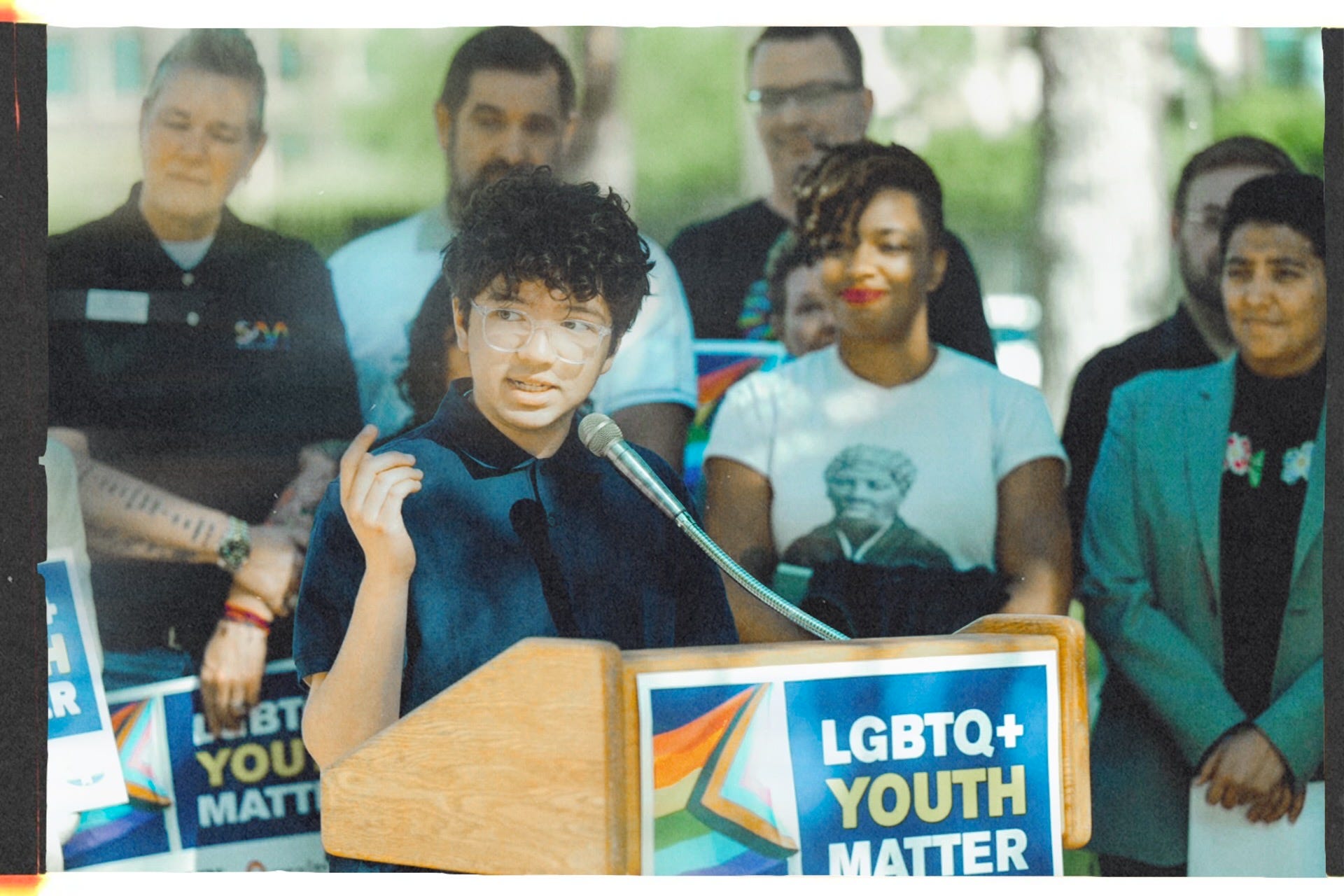
Like many of you, I am in more organizing chats than I can reasonably keep up with. Some days the messages pile up faster than I can read them, and it feels like every conversation is moving at the speed of whatever the political moment demands. A few days ago I opened one thread and saw that I had missed forty three messages. Anyone who has ever been in an advocacy chat knows exactly what that means. Something happened.
We are also in the middle of Trans Month of Visibility, and at the same time we are right in the thick of legislative sessions happening across the country. This is the time of year when lawmakers are debating bills that directly impact trans people and especially trans youth. It is also the time when advocates and families begin setting up meetings with politicians in the hope of stopping harmful policy before it moves any further.
Visibility is often at the center of those efforts. Many of us believe that if politicians could just hear directly from families and young people, something might shift in the way they think about these issues. We believe that sharing our stories is a way of helping them understand the real lives behind the policies they are debating. And sometimes that belief is affirmed. There are moments when these meetings lead to real wins, when a lawmaker hears directly from families and decides not to support the harm they might otherwise have imposed on a trans young person. We have seen those moments happen. But the truth is that these meetings are not always safe spaces for our children, even when we walk into them believing that they will be. There are also moments when those rooms reveal the power dynamics that shape our political system, and in those rare moments you can find yourself regretting the trust you placed in a process that leaves families and young people exposed to something that feels oppressive and overwhelming.
Yesterday I finally had a chance to talk to two of the moms about what had unfolded in one of those meetings, and had caused the group chat to explode. A meeting had been set up with a candidate who is running for a local seat in the area back home, From what they described, the meeting had good intentions behind it, but it had not been planned as carefully as it probably should have been. Several families had agreed to attend and all of the children were meant to be part of the meeting.
But when the time came, things did not unfold the way they were intended. Two of the families who had committed to coming never showed up, and one family arrived almost an hour late. So the two families who were there at the start of the meeting were parents who are still fairly new to our community and to this kind of advocacy work. Their children were young, and they suddenly found themselves carrying the conversation in a room that had been intended to hold a larger group of families and a broader circle of support.
The candidate they were meeting with is a moderate Democrat who holds some troubling views when it comes to trans youth, particularly around access to sports and participation. The kind of position that sits in the same lane we have seen from other politicians like Ruben Gallego. The type of framing that can sound measured to people who are not paying close attention but lands very differently for families whose children are directly impacted.
When the moms told me about the meeting, I listened and felt that familiar mix of emotions. I felt proud of their courage for showing up. I felt angry that families have to keep explaining their children’s humanity to people who should already understand it. And I felt that quiet ache that comes when you wish you could have been there to help carry the weight. After these kinds of meetings, what people often need most is not another strategy conversation but somewhere to process what just happened, because these meetings can be incredibly taxing, and heavy on the heart, especially for kids.
I remember that Daniel almost always needed extra support after we left meetings with political leaders. More often than not, I would take him out to eat afterward, because sitting down together over a good meal gave us space to talk through what had just happened. Those moments of conversation helped him process how he felt the meeting had gone and what it meant to be in a room where adults were debating things that directly affected his life. The emotional labor that young people carry in those spaces is enormous. They walk in knowing that the people across the table may be shaping policies that will ultimately affect their schools, their healthcare, and the way they move through the world, and even after the meeting ends, the weight of those moments does not simply disappear.
Hearing about this meeting brought me back to one that still sits with me years later. It was a meeting I helped organize alongside partner organizations with Senator John Kavanagh in Arizona. At the time, Kavanagh had said during a public hearing that he had never met a trans youth and that his concerns about trans related legislation were about protecting ALL children, even transgender children. That claim became the opening we worked with, because if he had never met trans youth, then perhaps he needed to hear directly from them.
So we organized a private meeting with eight families and several trans kids and teens who were willing to share their experiences with him. Looking back now, I can still remember the mix of nervousness, apprehension, and hope we carried into that room. There is always a small part of you that wants to believe that proximity might change something, that hearing real stories might soften the certainty behind someone’s political position.
The meeting went terribly. Kavanagh was dismissive and openly transphobic, and instead of listening to the youth in the room, he asked invasive and inappropriate questions. He directed questions at young trans girls that alluded to their bodies and he asked what they were born with, and the tone of the conversation made it clear very quickly that this was not a space where the children in that room were being treated with dignity.
When we left that meeting, I cried and apologized to the families over and over again. I felt like I had failed them because I had helped organize the meeting and in my mind that meant I had a responsibility to protect the families who trusted the process and trusted me to do right by them. To this day it remains one of my deepest organizing regrets.
The families were incredibly kind to me afterward. They told me they did not regret going, and they said that even if his mind was not changed, they believed it still mattered that he had to sit across from them and look them in the eye. Their generosity stayed with me, but so did the lesson that organizing is not just about getting people in a room with power. It is also about thinking deeply about what those rooms will demand from the people we bring into them.
Before parent advocates walk into these rooms, it is important that we take time to be clear about why we are there and what we are asking for. These meetings can be emotionally charged spaces, and clarity helps steady us when the conversation becomes difficult. Our “why” should come from a place of love and protection for our children, but it should also be grounded in a clear understanding of what policy or decision is on the table. At the same time, our ask must be direct and specific. Politicians often respond most clearly when they understand exactly what action we are asking them to take, whether that means voting against a harmful bill, speaking publicly in support of trans youth, or refusing to advance policies that would limit our children’s participation in their schools and communities. It also means knowing our talking points clearly enough that the conversation does not drift into abstract debates about our children’s humanity, but instead stays focused on the real harm these policies cause and the concrete steps needed to prevent that harm. Taking the time to think through these things ahead of time is also part of how we prepare ourselves and the young person who may be walking into that room with us, because when families enter these spaces with clarity and purpose, it can help steady the conversation and create moments where harm reduction can happen more quickly.
As parent advocates, we can be well meaning in our pursuit of sharing our stories. Many of us came into this work believing that if people could just hear from our families directly, something might shift. Storytelling can open doors and help people understand experiences that are otherwise invisible to them, but being well meaning is not the same as being thoughtful about how and where those stories are shared.
Our children are not just examples in a political argument. They are young people whose lives are directly impacted by the people sitting across the table, and the emotional weight of those moments does not end when the meeting ends. It stays with them in ways that adults sometimes underestimate.
When I think back to the meeting with Senator Kavanagh, I know my intention was sincere because I believed that proximity might make a difference. I believed that if he heard directly from families and youth, something in him might shift. But good intentions do not always equal good judgment, and his transphobia was already too strong for that room to ever be a safe space for our children. That is something I understand much more clearly.
Last night I told Daniel about the meeting with the families back home, and he grew very quiet as I explained what had happened. I could see him taking it in the way he always does, listening closely and imagining what it must have felt like to be in that room. After a moment he became emotional. He told me he wished he could have been there with them, not to share his story, but to stand beside them and offer support. He said he understood how painful it must have been to sit across from and and adult who sees you and still question whether your life and your experiences are real. In that moment I could hear the protectiveness in his voice, the instinct older youth often develop after years of navigating these conversations. Daniel has always felt a deep sense of responsibility toward the younger kids in our community, especially the ones who find themselves in advocacy spaces they should never have had to enter in the first place. He knows what it feels like to be one of those young people sitting in a room with adults who hold enormous power over your life, wondering why the people across the table get to decide whether you are allowed to participate fully in your public life at school and in the world around you.
Daniel spoke to something important, something that often takes adults much longer to learn. Advocacy is not just about showing up to a meeting or sharing a story in a room with power. It is about preparation, and it is about making sure people are supported before they walk into those rooms and after they walk out of them. At its core, it is about community care.
Storytelling is powerful and it remains one of the most powerful tools we have. Stories shift culture because they create proximity, allowing people to see lives they may never encounter otherwise. That belief is one of the reasons I continue to write here, because stories build bridges to the people who are open and willing to learn.
The truth is that the people most likely to be changed by our stories are not always the politicians sitting across the table. Many of those politicians are influenced by money, party strategy, and the calculations of reelection, but our stories are often heard most deeply by the people standing just outside the room. They are heard by the parents who are still learning, by the neighbors who have never met a trans person before, and by the teachers who want to do better but do not yet know how.
Over the years I have been lucky to meet so many incredible trans youth who have become part of our extended community and chosen family. When they talk about their lives, they light up a room with the kind of joy that reminds you what childhood and adolescence are meant to hold. I think about Mya talking excitedly about cheer and singing, Daniel describing a new piece of music he is working on, and H sharing about a role she got in a play, along with so many other young people whose stories I carry with me.
Those conversations are not about politics. They are about joy and about growing up, and they are about the ordinary magic of being young and discovering who you are in the world. Trans youth deserve to see themselves thrive and to experience that kind of joy in their day to day lives just like any other young person.
And for the most part they do, except in the moments when they are forced into rooms where their humanity is debated by adults who have already decided who they are. Visibility can open doors, but it can also expose our children to rooms that were never built to hold their humanity with care. Those moments are a reminder that advocacy is not only about changing policies, but also about protecting the young people whose lives those policies shape, and it requires us to ask the hard questions about when, where, and how we share our stories.
As a mom, as someone who has spent years in rooms like these, and as the writer behind The Mamí Advocate, I keep coming back to the same truth. Our stories matter, but so does the care we wrap around the people who carry them. Visibility should never come at the cost of our children’s safety or their joy. The work ahead of us is not only about changing policy, it is about building communities that hold our young people with dignity, protection, and love. That is the work I will keep writing about here, because the stories we share with care can still build the kind of world our children deserve to grow up in.
If you have been reading along here for a while, you know that these reflections often come from moments like this one, moments when I am trying to make sense of what advocacy asks of families and what it asks of our children. I continue to write because I believe our stories help build the kind of proximity and community that makes real change possible. If this piece resonated with you, I hope you will consider subscribing to The Mamí Advocate and sharing this space with others who care about protecting trans youth and supporting the families who love them.
Thank you so very much for sharing your stories and helping show the rest of us a path 💗
A friend of mine was lobbying for Planned Parenthood in the Washington state legislature and had an elected official throw little plastic baby figurines at her during a meeting. As Stephen might say, some people had no home training.